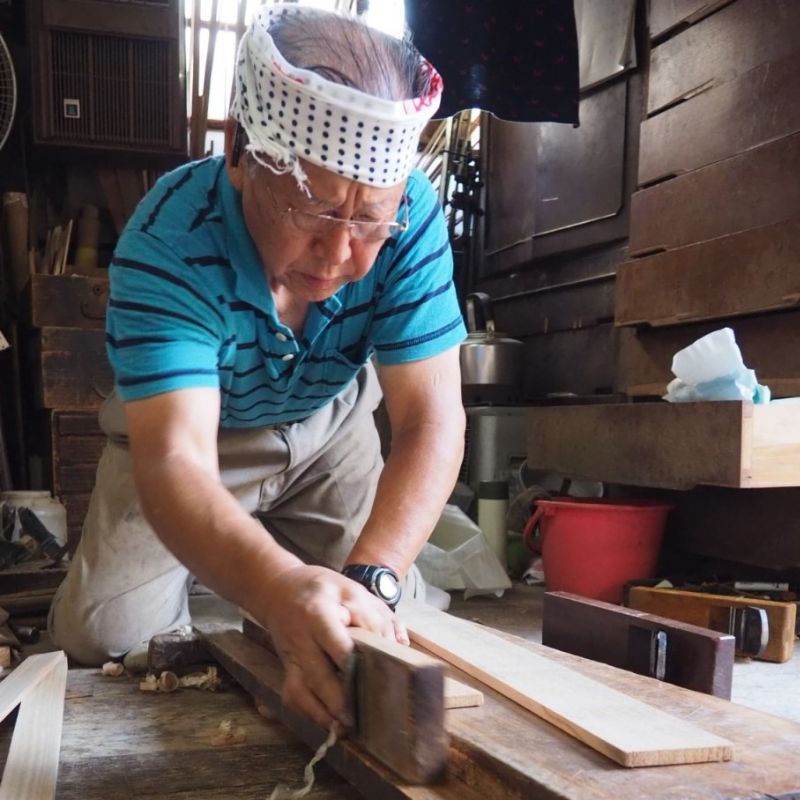
Arakawa's Artisans
Arakawa Ward Traditional Crafts Preservation Society
Artisanal Skills Still Passed Down Today in Arakawa
Artisanal Skills Still Passed Down Today in Arakawa
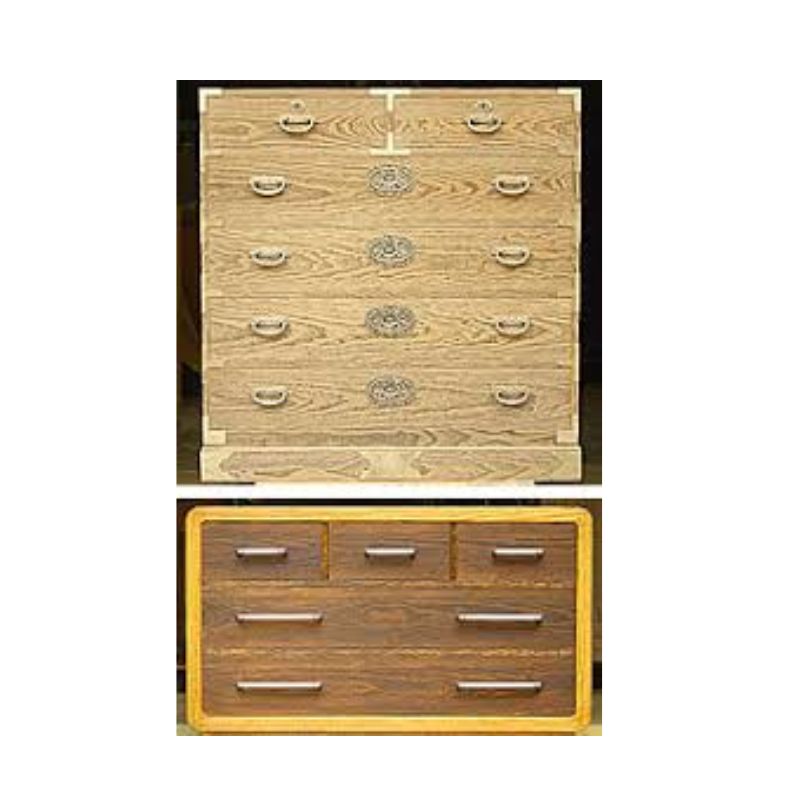
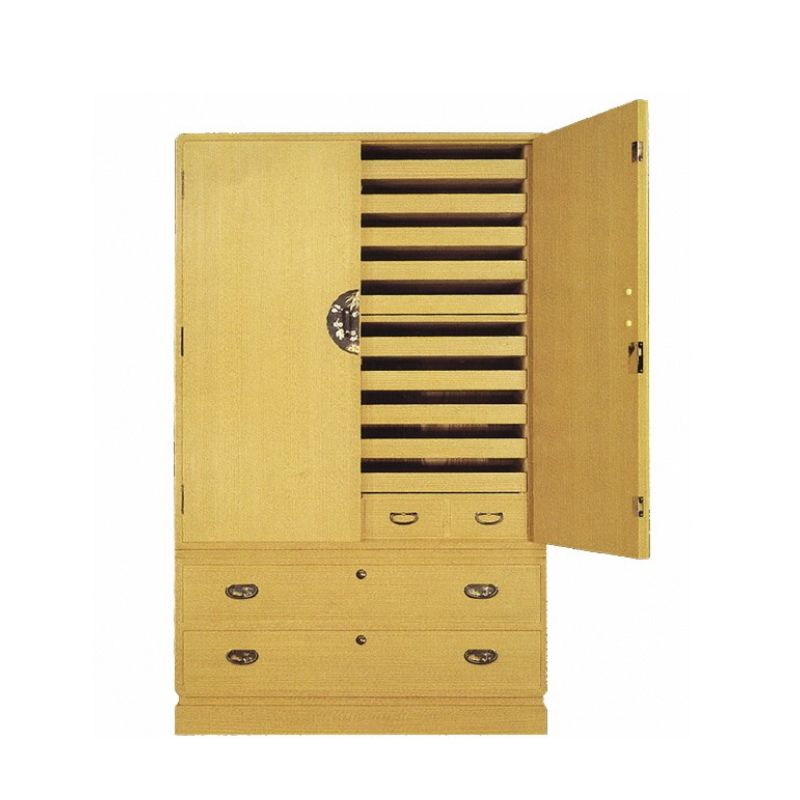
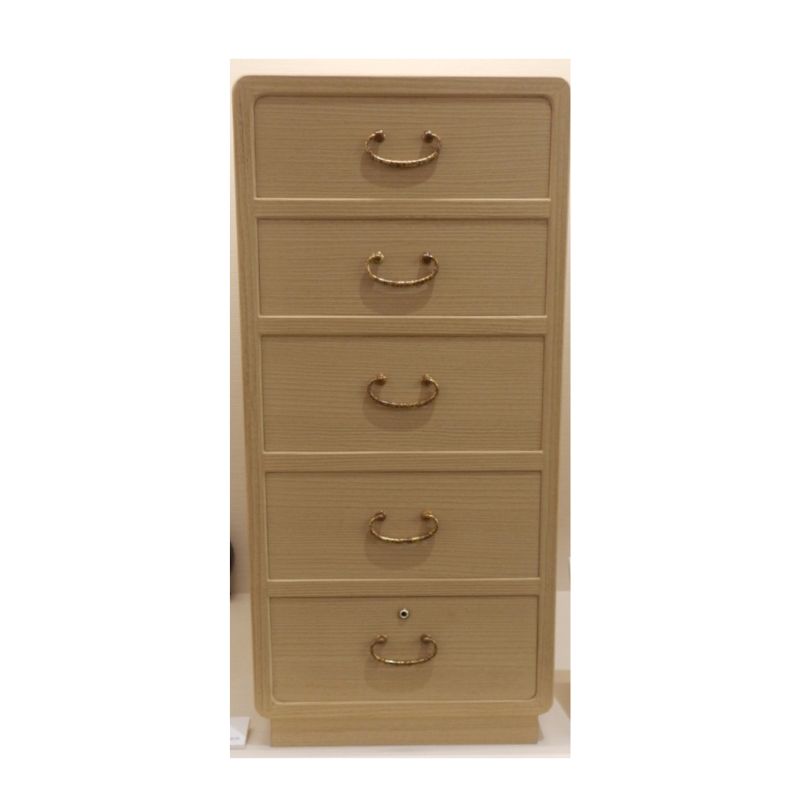
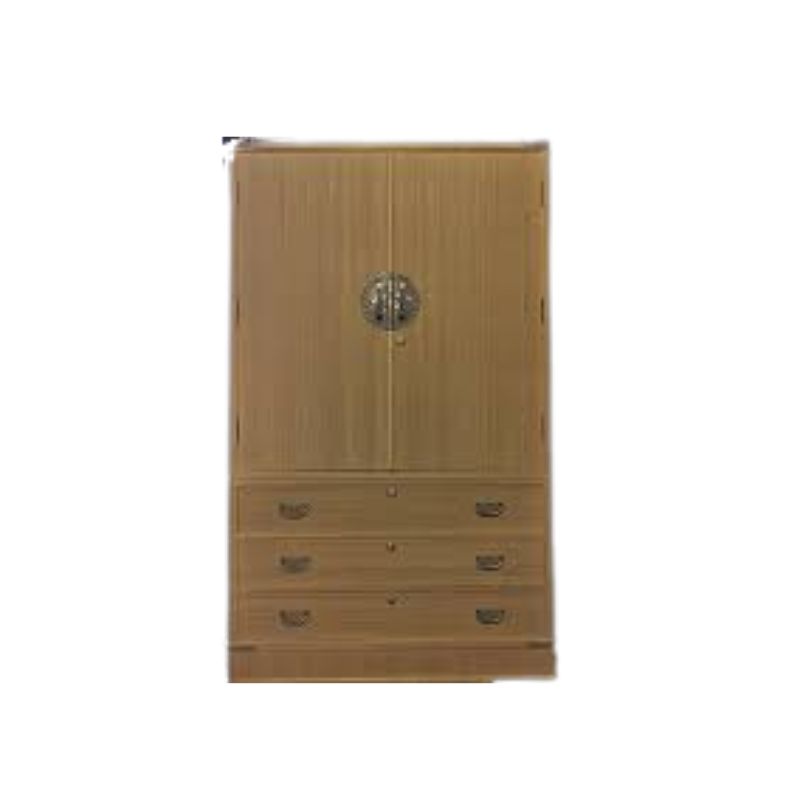
Paulownia chest of drawers
A woodworking technique in which strips of paulownia wood are laminated to form straight-grained panels, which are then assembled using mortise-and-tenon joints and wooden pegs. It is believed to have branched off from general cabinetmaking and become a specialized craft around the mid-18th century.
Paulownia wood excels in moisture absorption, fire resistance, and breathability, and has long been used as a material for storage furniture, such as chests for clothing.
Tokyo-style paulownia chests are characterized by their frame-door (kamachido) construction and have been crafted to showcase the beautiful grain of the paulownia wood.
The Work of an Artisan
Operations Engineering- Cut the paulownia wood into round-edged or tapered pieces, making them about 5 to 10 centimeters larger than the final dimensions, and fit them together (wood cutting)
- We perform “board burning” to correct warping and twisting in the boards.
- Apply adhesive and use clamps to secure the paulownia board firmly in place.
- Cut the paulownia board to the finished dimensions using a rip saw.
- I'm using a chisels to trim the base of the dresser.
- Score the surface with a chisel, tap it off, and remove the handle.
- Assemble the side panels (hodate) and top panel (tenban).
- Place your feet on the floor.
- Drill a hole and insert the book.
- Assembling the bottom.
- Insert the shelf.
- Handmade.
- Building a door.
- Colored using materials such as tonoko and yashabushi.
- Finally, attach the hardware to finish it off.
Arakawa's Artisans

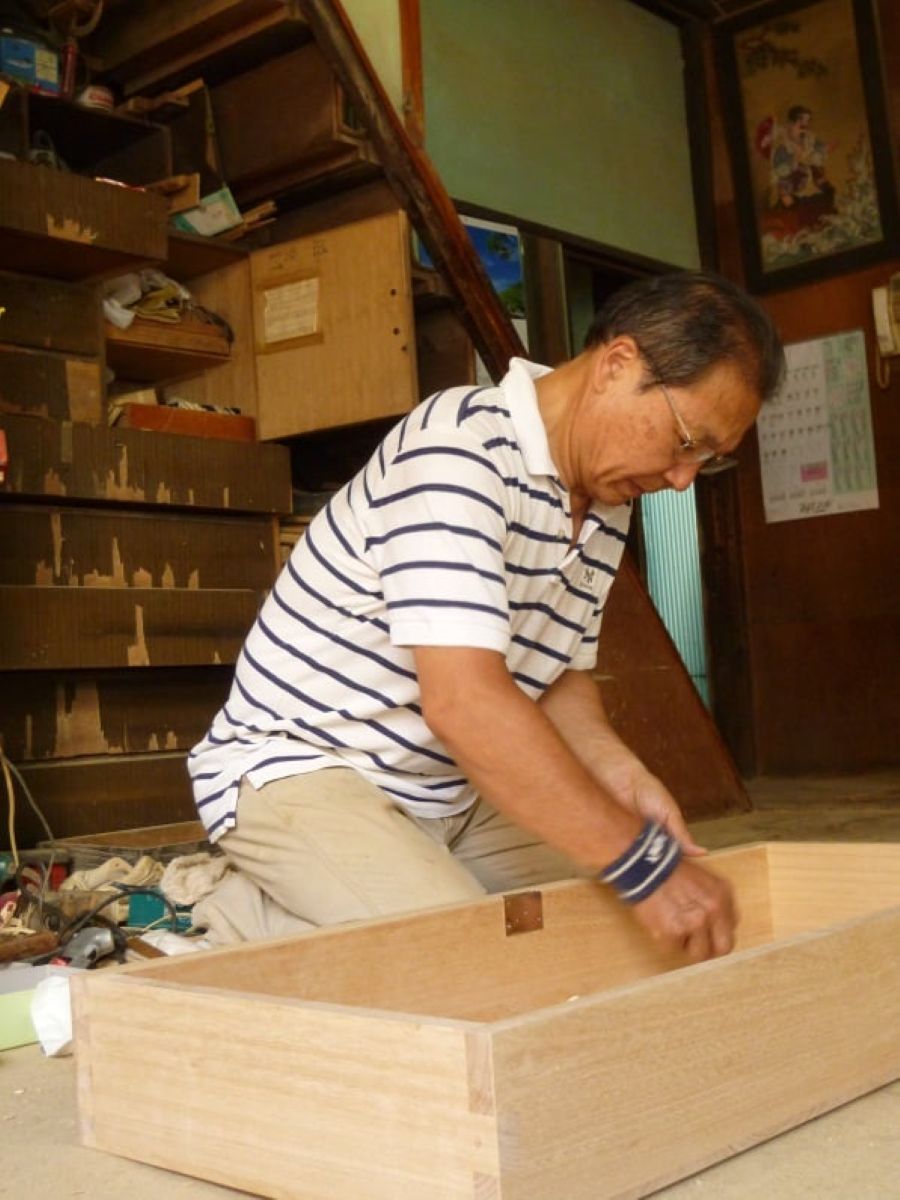
Yasuo Murai
Paulownia chest of drawers